
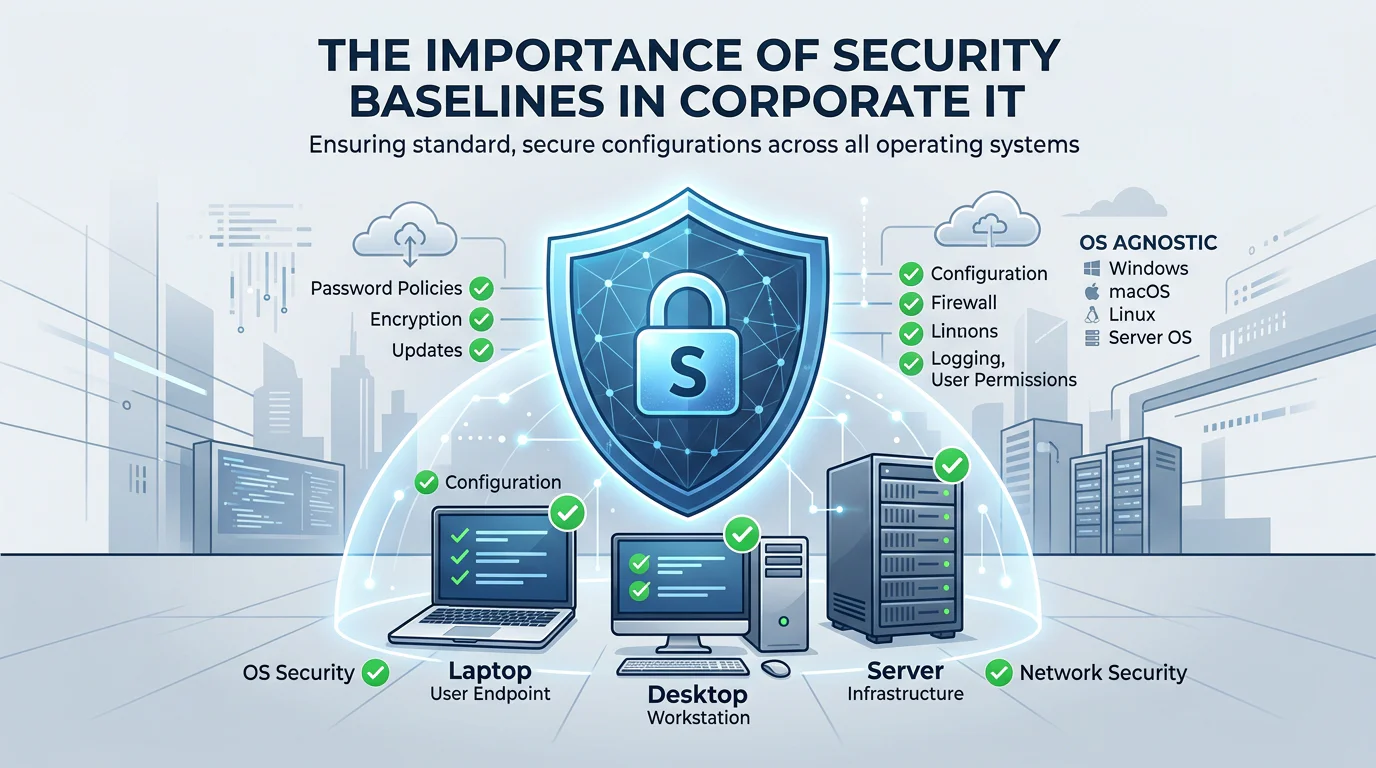
Security baselines are standard settings that define the minimum level of protection every corporate device should have, no matter the operating system. They go beyond antivirus and cover configuration, access, hardening, and visibility across the whole environment.
A strong baseline usually includes multi-factor authentication, full-disk encryption, automatic patching, firewall rules, password and screen-lock policies, and logging. It also includes inventory and asset management, so IT knows how many devices exist, who uses them, whether they are compliant, and whether they should still be allowed access. For example, a baseline may require laptops to be encrypted, servers to be tracked in inventory, and unmanaged devices to be blocked from corporate data.
Modern security also relies on more than endpoint settings. Security platforms can combine endpoint protection, threat detection, device visibility, and response actions in one place. They can flag suspicious behavior, isolate infected devices, identify missing security settings, and help teams check whether a device follows baseline policy. A zero trust network tool adds another layer by verifying identity, device health, location, and request context before granting access, and by allowing users to reach only the specific app or resource they need.
Security baselines are valuable because they make protection consistent and repeatable. They can enforce approved software, disable risky services, limit local admin rights, and maintain asset tracking across laptops, desktops, and servers. That keeps security built into daily operations instead of being handled only after an alert appears.


